Colorado HB25-1262 — the Regulate Private Security Officers and Agencies Act — takes effect August 1, 2026, creating the first statewide licensing regime for private security in Colorado. From that date, every individual providing private security services must hold either an event security officer license or a commercial security officer license from the new State Board of Private Security Services, and every security company must obtain an employer registration. Only licensed commercial officers with a board-issued weapon endorsement may carry firearms or non-lethal weapons. This guide covers everything Colorado security companies and guards need to prepare — license types, training, fees, employer registration, and transition planning.
Until now, Colorado has been one of a shrinking number of states without a statewide private security licensing law. Security operations were governed by a patchwork of city ordinances — Denver required a license, Colorado Springs required a license, and most of the rest of the state had no licensing at all. HB25-1262 replaces this patchwork with a unified state regime modeled on programs in California, New York, and Texas.
If you own or operate a security company in Colorado, employ guards in Colorado, or work as a security guard in Colorado, this law affects you starting August 1, 2026. This guide is written for security company owners, compliance officers, HR managers, and guards who need to understand what HB25-1262 requires and how to prepare.
What HB25-1262 Actually Does
HB25-1262 creates the State Board of Private Security Services within the Colorado Department of Regulatory Agencies (DORA). The Board has authority to:
- Issue individual licenses for security officers (two license types)
- Issue weapon endorsements for officers authorized to carry firearms or non-lethal weapons
- Register and regulate private security employers
- Certify training providers and curricula
- Investigate complaints and take disciplinary action
- Assess fines and revoke licenses for violations
Effective date: August 1, 2026. On that date, providing private security services without a license — or employing unlicensed security personnel without registration — becomes a regulated offense.
Who Needs a License Under HB25-1262
The law defines two individual license types and one employer registration.
Event Security Officer (ESO)
Covers temporary security assignments at events — concerts, conferences, sporting events, political rallies, festivals, trade shows, and similar gatherings.
Typical ESO work:
- Crowd management
- Access control at entry points
- Credential verification
- Event perimeter security
- VIP escort for non-armed protection
ESO licenses have lower training requirements than commercial licenses because the work is narrower and typically unarmed.
Commercial Security Officer (CSO)
Covers all other private security work — essentially any security assignment that isn’t a temporary event.
Typical CSO work:
- Static security posts (corporate campuses, retail, industrial facilities)
- Mobile patrol (HOAs, commercial districts)
- Residential security (gated communities, high-rise buildings)
- Loss prevention
- Executive protection (unarmed or armed with endorsement)
- Alarm response
Commercial officers have higher training requirements and are the only license type eligible for weapon endorsements.
Private Security Employer Registration
Every company that employs security officers in Colorado — whether a dedicated security firm or a parent business operating in-house security — must register with the State Board before August 1, 2026.
The registration typically requires:
- Company name, address, and ownership structure
- Designation of a responsible individual (company principal)
- Proof of liability insurance
- Proof of workers’ compensation coverage
- Registration fee
- Disclosure of disciplinary history
Operating without employer registration after August 1, 2026 carries fines and potential cease-and-desist orders.
Weapon Endorsements for Armed Guards
Only licensed Commercial Security Officers may apply for weapon endorsements. The law distinguishes between:
Firearm Endorsement
Authorizes the officer to carry a handgun or other firearm on duty. Requires:
- Commercial Security Officer license
- Completion of firearms training curriculum certified by the Board
- Qualification shoot at a state-approved range
- Background check beyond standard criminal history (including mental health record review in most comparable state programs)
- Annual requalification
Non-Lethal Weapon Endorsement
Authorizes the officer to carry approved non-lethal weapons — typically pepper spray (OC spray), batons, and tasers. Requires:
- Commercial Security Officer license
- Completion of non-lethal weapons training
- Annual refresher training
ESOs and CSOs without a weapon endorsement may not carry any weapon on duty. Carrying without endorsement is a disciplinary offense and potential criminal violation.
Training Requirements
The exact training curriculum is being finalized by the State Board, but based on the bill’s framework and comparable state programs (California BSIS, Texas DPS, New York DCJS), expect:
Event Security Officer Training
| Topic | Expected Hours |
|---|---|
| Colorado law and security officer authority | 4-6 |
| Use of force and citizen’s arrest | 2-4 |
| De-escalation and conflict resolution | 4 |
| Crowd management principles | 4-6 |
| Incident reporting and documentation | 2 |
| Emergency response and evacuation | 2-4 |
| First aid / CPR / AED | 4-8 |
| Total expected | 24-40 hours |
Commercial Security Officer Training
| Topic | Expected Hours |
|---|---|
| All ESO topics | 24-40 |
| Patrol techniques | 4-6 |
| Access control and credential verification | 2-4 |
| Report writing (detailed) | 4-6 |
| Post orders and standard operating procedures | 2-4 |
| Special populations (mental health, substance abuse) | 2-4 |
| Workplace safety and OSHA basics | 2 |
| Total expected | 40-68 hours |
Firearm Endorsement Training
| Topic | Expected Hours |
|---|---|
| Colorado firearms law | 4 |
| Safe handling and storage | 4 |
| Range qualification (live fire) | 8-16 |
| Use of deadly force | 4-8 |
| Retention and duty belt | 2 |
| Mental health / suicide prevention | 2 |
| Total expected | 24-40 hours |
These hours are estimates based on comparable state programs. Official Colorado hours will be published by the State Board before August 1, 2026 — always verify against the current board-approved curriculum.
Expected Fees (Preliminary)
Specific fee amounts have not yet been published. Based on the HB25-1262 fiscal note and comparable state programs, expect the following ranges:
| Item | Expected Cost |
|---|---|
| Event Security Officer license | $75-$150 |
| Commercial Security Officer license | $150-$300 |
| Firearm endorsement | $100-$250 |
| Non-lethal weapon endorsement | $50-$150 |
| Employer registration (small firm) | $300-$600 |
| Employer registration (large firm) | $600-$2,000 |
| License renewal (every 2-3 years) | Similar to original |
| Background check / fingerprinting | $50-$100 |
| Required training | $200-$600 (varies by provider) |
Total cost to license one commercial armed guard: approximately $500-$1,200 including training.
Always verify current fees at the Colorado DORA website once the State Board publishes the final schedule.
How HB25-1262 Compares to Denver and Colorado Springs Licensing
Cities with existing private security licensing will likely have their local requirements preempted or harmonized with the state regime. Expect:
City of Denver
Denver has required private security officer licensing through the Department of Excise and Licenses for years. Current Denver license holders will likely:
- Transition to the state license via expedited process
- Receive credit for existing training hours
- Pay a transition fee lower than full state license cost
Colorado Springs
Colorado Springs has its own ordinance requiring security officer registration through the City Clerk. Same transition dynamics apply — existing Colorado Springs registrants should receive credit toward the new state license.
Cities Without Prior Licensing
Most of Colorado (Boulder, Aurora, Fort Collins, Grand Junction, etc.) has had no private security licensing. Guards and companies in these jurisdictions face the biggest compliance lift — they must complete full licensing from scratch before August 1, 2026.
Compliance Timeline: What to Do and When
April-May 2026
- Audit your Colorado workforce. List every employee currently providing security services in Colorado.
- Review existing credentials. Denver license, Colorado Springs registration, prior security experience, completed training.
- Budget for licensing. Estimate per-guard cost × number of guards + employer registration.
- Monitor State Board announcements. Sign up for DORA notifications to receive regulations, fee schedules, and training provider certifications as published.
June 2026
- Identify training providers. As the State Board certifies providers, book training slots early — demand will surge closer to August.
- Collect documentation. For each guard: Social Security number, fingerprints, prior training records, proof of identity, legal authorization to work.
- Begin employer registration application. Prepare required documents so you can file the day the portal opens.
July 2026
- File individual license applications. For every guard, submit applications 30-45 days before August 1, 2026. Processing time may extend as the Board handles volume.
- Complete required training. Any guard without documented training must complete the certified curriculum.
- File employer registration. Ensure registration is processed before the August 1 deadline.
August 1, 2026
- Verify all licenses are active. Check each guard’s license status on the State Board portal before dispatching them for post.
- Update contracts. New contracts signed after August 1 should reference the state licensing regime.
- Update insurance. Confirm policies reflect the new licensure framework.
- Enforce compliance. Any guard without an active license may not work on a Colorado post after this date.
Ongoing (after August 1, 2026)
- Track renewals. Individual licenses will likely renew every 2-3 years. Employer registration likely annual.
- Document continuing education. If continuing education is required (likely), track completion.
- Audit regularly. Quarterly verification that every Colorado guard holds an active, valid license.
Penalties for Non-Compliance
Operating without a license after August 1, 2026 carries significant penalties under HB25-1262. Based on the bill framework, expect:
- Individual guards without a license: Administrative fines ($250-$2,500 per violation), possible misdemeanor criminal charge for repeat offenses.
- Employers using unlicensed guards: Fines per unlicensed guard per day ($500-$5,000), cease-and-desist orders requiring immediate suspension of operations, potential loss of future licensing.
- Carrying firearms without endorsement: Misdemeanor criminal charge, immediate license suspension, mandatory additional training before re-licensing.
- Falsifying records: Felony charge, permanent revocation.
- Failing to report disciplinary action from another state: License suspension, fines.
Penalties scale with severity and repeat offense history.
Transition Planning for Multi-State Security Companies
If your company operates in multiple states (e.g., Denver plus Dallas, Phoenix, and Salt Lake City), HB25-1262 affects only your Colorado operations. But the compliance lift is real:
- Separate Colorado licensing team. Designate one person (or small team) accountable for Colorado compliance, distinct from operations teams in other states.
- State-by-state credential map. Maintain a database that shows each guard’s credentials in every state they work. Colorado will be a new column.
- Contract reviews. Commercial clients with Colorado properties may require proof of state licensure. Update contract templates.
- Pricing adjustments. Licensing costs + training time + administrative overhead = 3-8% cost increase per Colorado guard-hour. Most companies pass this through to clients via contract rate adjustments.
- Hiring process changes. New hires in Colorado must be licensed before their first shift. Build this into onboarding workflow.
FAQs for Specific Situations
I’m a property manager with an in-house security team. Do I need to register?
Probably yes. The law covers private security services broadly and in-house teams typically meet the definition. The State Board may carve out narrow exemptions for employees protecting only their own employer’s property, but expect to register absent explicit exemption.
I’m a bar or nightclub owner using bouncers. Are bouncers covered?
Likely yes if they perform security functions beyond ID checks. Look at the role: if they handle ejections, de-escalation, and access control, they’re providing security services and need licenses. Pure door staff checking IDs may not be covered but read the final regulations carefully.
I work as an unarmed hospital security officer employed directly by the hospital. Am I covered?
Same answer — probably yes. Hospitals have been a specific focus area given high workplace violence rates. Expect hospital in-house security teams to be covered and need licensing.
I’m a retired law enforcement officer working part-time in private security. Do I need a license?
Yes. Prior law enforcement experience may expedite the process (credit for training hours, expedited background check) but you still need a state license to work private security.
I’m a licensed guard from another state working a one-time event in Colorado. Do I need a Colorado license?
Yes. The law does not include a reciprocity exemption for out-of-state licenses. Even a single-day assignment requires a Colorado license. Expect emergency/temporary licensing provisions for certain narrow circumstances (major events, mutual aid), but don’t rely on them.
I’m a general contractor hiring security for a construction site. Am I the employer?
Depends on the relationship. If you hire a security company and the company employs the guards, the security company registers. If you directly employ the guards, you register as the employer. Many construction sites use contracted security — the security company handles all compliance.
How Workforce Management Software Helps Colorado Compliance
Managing licensing compliance for even a small security team — tracking each guard’s license type, expiration date, weapon endorsement status, and training completion — is a significant administrative burden without software. Spreadsheets break; paper files get lost.
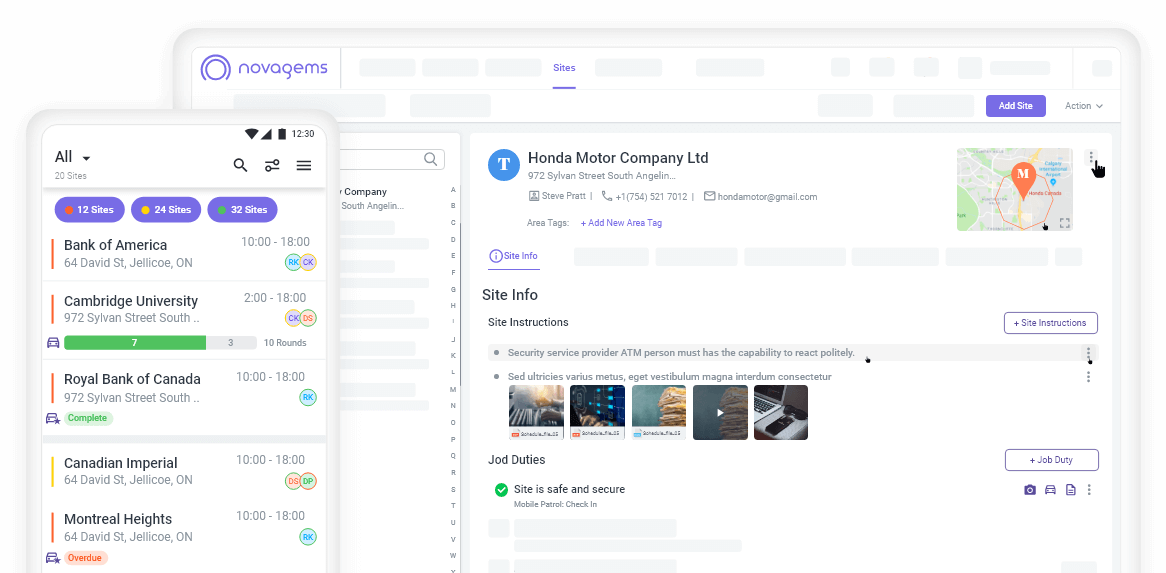
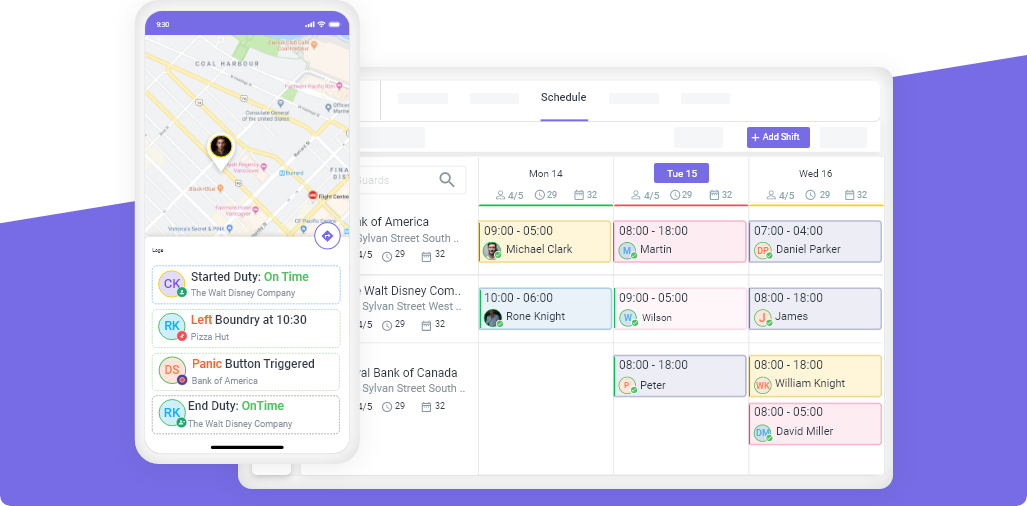
Modern workforce platforms like Novagems help by:
- Storing credentials digitally — each guard’s license, endorsements, and training records in one place
- Automated expiration alerts — 60/30/7-day warnings before any license or endorsement expires
- Assignment gating — guards without active licenses cannot be scheduled on Colorado posts
- Audit-ready reporting — on-demand exports for State Board inspections or client audits
- Training tracking — log every hour of training by topic for each guard
- GPS-verified patrols — proof of work that supports license renewal and client contracts
- Digital checkpoint verification — incident documentation that satisfies reporting requirements
For Colorado security companies, the combination of new state licensing + existing client expectations for technology-enabled operations makes this the right time to professionalize operations. Start a free 14-day trial and see how.
Common HB25-1262 Preparation Mistakes
| Mistake | Fix |
|---|---|
| Waiting until July to start licensing | Start April-May; allow 60+ days buffer |
| Assuming Denver/Colorado Springs licenses carry over automatically | Plan for explicit transition process; apply early |
| Using unlicensed training providers | Use only Board-certified providers when announced |
| Not budgeting for administrative cost | $500-$1,200 per armed guard, $300-$600 per unarmed |
| Ignoring employer registration | Without employer registration, your licensed guards can’t legally work for you |
| Failing to update contracts | Commercial clients may require proof of state licensing — update contract templates now |
| Relying on paper documentation | Use digital workforce management to track licenses at scale |
| Ignoring penalties | Operating without compliance after August 1 is expensive and can end the business |
Wrapping Up
HB25-1262 is the biggest change to Colorado private security in a generation. The companies that handle the transition well will come out stronger — fully licensed workforce, professional compliance systems, and contract terms that reflect the new reality. The companies that wait or cut corners will face fines, client losses, and operational disruption.
The right approach: start now. Audit your workforce, budget for licensing costs, select certified training providers as soon as the State Board publishes them, and file applications 60+ days before the August 1, 2026 enforcement date. Build a system for tracking licenses, endorsements, and training at the individual level — because this framework doesn’t go away, it only gets more complex as enforcement matures.
For Colorado security companies looking for a compliance and operations platform built for state-licensed workforces, Novagems handles licensing tracking, training records, GPS-verified patrols, and client-facing reporting in a single system. Start a 14-day free trial.
Further Reading
- Types of Security Guard Services: A Complete Guide — pillar article covering all security service categories
- How to Price Security Guard Contracts in 2026 — how to price the compliance cost increase into contracts
- Event Security Services: Complete Guide — Event Security Officer license applies here
- Residential Security Services — Commercial Security Officer license applies
- School & Campus Security Services — Commercial Security Officer license applies
- Workforce Management for Security Companies — licensing tracking and compliance operations
- GPS Tracking and Geofencing — verified patrols supporting license renewal and client audits
This article is an informational summary of Colorado HB25-1262. It is not legal advice. Always consult the current text of HB25-1262, State Board of Private Security Services regulations, and qualified Colorado counsel before making compliance decisions. Fee ranges and training hours are estimates until officially published.
See Novagems in action
Join 500+ security & cleaning companies that replaced spreadsheets with Novagems.
✓ 14-day free trial · ✓ Free onboarding · ✓ Cancel anytime