To bid on a security guard contract, you need to find the RFP (SAM.gov for federal, state procurement portals for local), calculate your fully burdened bill rate using the pricing formula (guard pay + payroll burden + overhead + profit margin), and submit a compliant proposal that addresses every requirement in the solicitation. The most common reason security companies lose bids is not price — it is failing to address mandatory requirements or submitting generic proposals that do not demonstrate understanding of the client’s specific needs.
Bidding on security contracts is where most security companies either grow or stagnate. The companies that win consistently are not always the cheapest or the biggest. They are the ones that submit professional, compliant proposals that clearly communicate what the client will get, how much it will cost, and why this company is the right choice.
This guide walks you through the entire bidding process — from finding contracts to calculating pricing to writing proposals that win.
Understanding the Bidding Process
How Security Contracts Are Awarded
| Method | How It Works | Where You Find Them |
|---|---|---|
| Competitive bid / RFP | Client publishes requirements, multiple companies submit proposals, best proposal wins | SAM.gov, state portals, BidNet |
| Invitation to bid (ITB) | Client invites specific companies to submit pricing for a defined scope | Direct invitation from client |
| Request for quote (RFQ) | Client asks for pricing only (scope already defined) | Direct from client, government portals |
| Sole source | Client awards directly to one company without competition | Relationship-based, specialized services |
| Direct negotiation | Client and company negotiate terms directly | Commercial clients, referrals |
Government contracts almost always use competitive bids or RFPs. Commercial contracts use a mix — larger clients use formal RFPs, smaller clients negotiate directly.
Step 1: Find Contracts to Bid On
Government Contracts (Federal)
SAM.gov is the single source for all federal contract opportunities.
- Register on SAM.gov (free, required to bid on any federal contract)
- Search by NAICS code: 561612 (Security Guards and Patrol Services)
- Filter by state, dollar amount, and set-aside type
- Set up email alerts for new postings matching your criteria
Tip: Federal security contracts over $2,500 fall under the Service Contract Act (SCA), which requires prevailing wages. Always check the wage determination before pricing — SCA wages are often $22-$35/hr for guards, significantly above market rate.
Government Contracts (State and Local)
Every state has a procurement portal:
| State | Portal |
|---|---|
| California | caleprocure.ca.gov |
| Texas | comptroller.texas.gov/purchasing |
| Florida | myflorida.com/apps/vbs |
| New York | ogs.ny.gov/procurement |
| All states | naspo.org (National Association of State Procurement Officials) |
Cities and counties post on their own purchasing websites. Search “[your city] procurement portal” or “[your county] bid opportunities.”
Commercial Contracts
Most commercial security contracts are not publicly posted. They come through:
- Direct outreach to property managers and facilities directors
- Referrals from current clients and industry contacts
- Networking at BOMA, IFMA, ASIS chapter events
- Incumbent loss — when a client’s current vendor underperforms and they reach out to alternatives
- Online presence — clients searching Google for “security companies near me”
For commercial contracts, the “bidding” process is typically a proposal in response to a direct request, not a formal RFP.
Step 2: Read the RFP Carefully
Government RFPs can be 30-100+ pages. Do not skip any section. Here is what to look for:
Critical RFP Sections
| Section | What to Look For |
|---|---|
| Scope of work | Guard count, hours, shift times, post types (armed/unarmed), locations |
| Mandatory requirements | Minimum insurance, licenses, certifications, experience level |
| Submission instructions | Format (paper/electronic), page limits, required forms, deadline |
| Evaluation criteria | How proposals are scored — price, technical approach, past performance, small business status |
| Wage determination | SCA prevailing wages (federal) or local wage requirements |
| Period of performance | Base year + option years (a “1+4” means 1 base year with 4 annual renewal options) |
| Bonding requirements | Performance bonds or fidelity bonds, if required |
| Key personnel | Whether specific individuals (project manager, site supervisor) must be named |
Red Flags to Watch For
- Unrealistic guard-to-site ratios — if the RFP requires 24/7 coverage at 5 sites with only 10 guards, the math does not work
- No site visit opportunity — bidding blind on a site you have never seen increases risk
- Extremely low incumbent pricing — if the current vendor is underbidding and losing money, the client’s price expectations may be unrealistic
- Vague evaluation criteria — if the RFP does not explain how proposals are scored, the selection may be subjective
Step 3: Conduct a Site Visit
Always request a site visit before bidding. Walk the property. Count the entry points. Check the lighting. Measure patrol distances. Talk to the current guards if possible.
A site visit lets you:
- Accurately estimate patrol times and staffing needs
- Identify security gaps the client may not have mentioned
- Demonstrate seriousness and professionalism
- Ask questions that improve your proposal
If the RFP does not mention a site visit, ask. Most clients will accommodate the request. If they refuse, factor additional risk into your pricing.
Step 4: Calculate Your Bid Price
The Pricing Formula
Bill Rate = Guard Pay + Payroll Burden + Overhead + Profit Margin
Component Breakdown
Guard pay rate: The hourly wage you pay your guards. Research your local market — underpaying leads to turnover, overpaying kills your margins.
Payroll burden (25-35% of pay):
| Cost | Rate |
|---|---|
| FICA (Social Security + Medicare) | 7.65% |
| FUTA (Federal unemployment) | 0.6% |
| SUTA (State unemployment) | 2-6% (varies by state) |
| Workers’ compensation | 5-15% (varies by state and claims history) |
| Benefits (if offered) | 3-8% |
| Total burden | 25-35% |
Overhead ($2-4/hr per guard):
| Item | Monthly Cost | Per Guard Hour |
|---|---|---|
| Security management software | $5-15/guard | $0.03-$0.09 |
| Administrative staff | $3,000-$5,000 | $0.50-$1.50 |
| Insurance (GL, commercial auto) | $500-$2,000 | $0.30-$0.80 |
| Office/facilities | $500-$2,000 | $0.20-$0.60 |
| Uniforms and equipment | $200-$500 | $0.10-$0.30 |
| Marketing and sales | $500-$1,500 | $0.20-$0.50 |
| Total overhead | $1.33-$3.79 |
Profit margin: Target 10-20%. Below 10% leaves no room for error. Above 20% makes you uncompetitive on most bids.
Example Calculations
| Component | Unarmed Guard | Armed Guard |
|---|---|---|
| Guard pay | $18.00 | $25.00 |
| Payroll burden (30%) | $5.40 | $7.50 |
| Overhead | $2.60 | $3.00 |
| Profit margin (15%) | $3.90 | $5.33 |
| Bill rate | $29.90/hr | $40.83/hr |
Annual Contract Value
To estimate the annual contract value:
Annual Value = Bill Rate × Hours per Week × 52 weeks
For 24/7 coverage (168 hrs/week) at $29.90/hr: $29.90 × 168 × 52 = $261,110/year
Step 5: Write the Proposal
Proposal Structure
| Section | Length | Content |
|---|---|---|
| Cover letter | 1 page | Personalized, references specific client needs, states why you are the right fit |
| Company overview | 1-2 pages | History, size, service area, licenses, insurance, key staff |
| Understanding of need | 1 page | Restate client’s requirements in your own words — proves you read the RFP |
| Technical approach | 3-5 pages | How you will deliver: staffing plan, training, patrol procedures, supervision, escalation |
| Technology & reporting | 1-2 pages | GPS tracking, client portal, incident reporting, sample reports |
| Staffing & qualifications | 1-2 pages | Guard selection, background checks, training program, certifications |
| Pricing | 1-2 pages | Clear hourly rates, monthly estimates, annual total, what is included |
| Past performance | 1-2 pages | 2-3 references with company name, contact, contract scope, dates |
| Appendices | As needed | Insurance certificates, licenses, sample reports, organizational chart |
Winning Proposal Tips
- Address every requirement — go through the RFP line by line and ensure your proposal responds to each point. Missing one mandatory item can disqualify you.
- Be specific, not generic — “We will provide GPS tracking” is weak. “Guards will clock in via our mobile app with geofenced verification, and you will receive an automated patrol report every morning at 7 AM with GPS routes and checkpoint scans” is strong.
- Include sample reports — show the client exactly what they will receive. A sample GPS patrol report or incident report is worth more than a page of marketing copy.
- Name your people — if possible, identify the site supervisor and project manager by name with their qualifications. Clients hire people, not companies.
- Price transparently — break down your pricing so the client can see what they are paying for. Hidden pricing loses trust.
Step 6: Submit and Follow Up
Submission Checklist
- All required forms completed and signed
- Pricing matches the format requested (hourly, monthly, annual)
- Insurance certificates current and meeting minimum requirements
- Licenses current and correct jurisdiction
- Proposal formatted per RFP instructions (page limits, font size, margins)
- Submitted before the deadline (late = automatic disqualification)
- Electronic submission through the correct portal (if applicable)
After Submission
- Government contracts: Wait for the evaluation period. You may receive clarification questions — respond within 24 hours. Award decisions are typically announced 30-90 days after submission.
- Commercial contracts: Follow up within one week. Offer to answer questions or present in person. Commercial clients often want a face-to-face meeting before making a decision.
Common Bidding Mistakes
| Mistake | Why It Hurts | How to Avoid |
|---|---|---|
| Pricing below cost to win | You win but lose money on every hour | Always calculate fully burdened cost first |
| Generic proposal | Client sees you did not read their RFP | Reference their specific property, needs, and requirements |
| Missing mandatory requirements | Automatic disqualification | Use a compliance matrix — check every requirement |
| No site visit | Inaccurate pricing, missed risks | Always request a walkthrough |
| Late submission | Automatic disqualification | Submit 24-48 hours before deadline |
| No technology mentioned | Looks outdated vs. competitors | Show GPS tracking, client portal, digital reporting |
| No past performance | No credibility | Start with small contracts to build references |
Getting Started
If you are new to bidding:
- Register on SAM.gov — free, takes 2-3 business days, required for all federal bids
- Set up bid alerts on your state procurement portal for security guard services
- Build your bid library — company overview, insurance certs, license copies, sample reports — ready to insert into any proposal
- Bid on 2-3 small contracts to practice the process before targeting larger opportunities
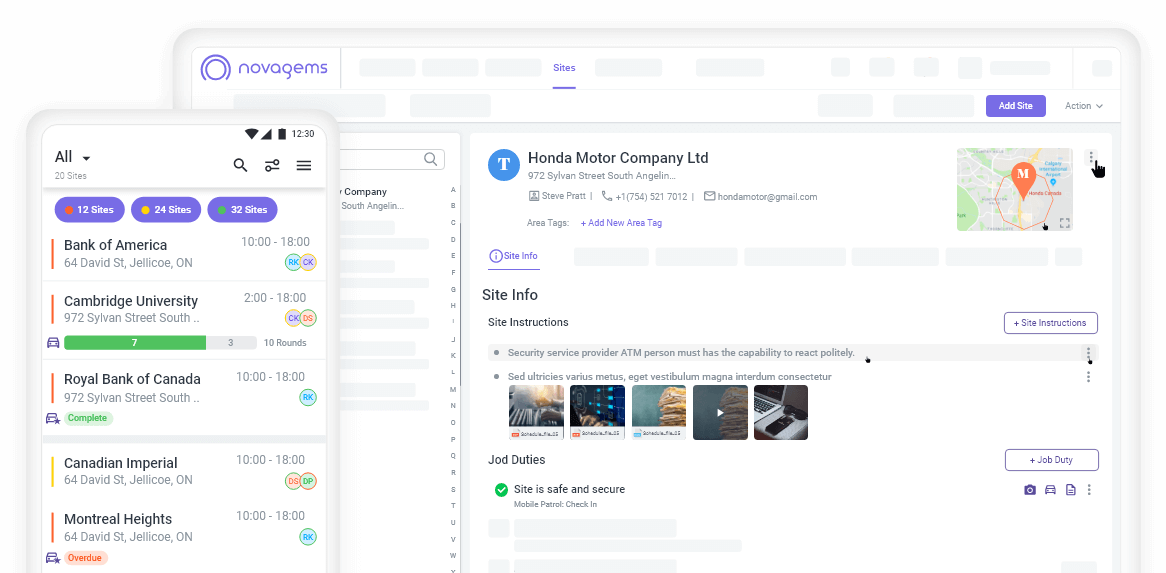
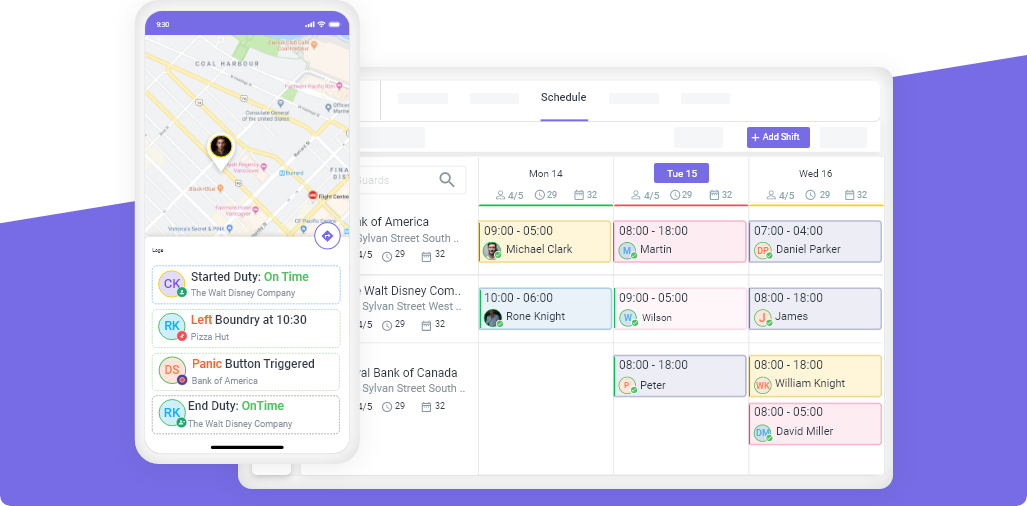
If you need the technology capabilities (GPS tracking, client portal, automated reports) that win competitive bids, start a free 14-day trial with Novagems and have sample reports ready for your next proposal.
See Novagems in action
Join 500+ security & cleaning companies that replaced spreadsheets with Novagems.
✓ 14-day free trial · ✓ Free onboarding · ✓ Cancel anytime