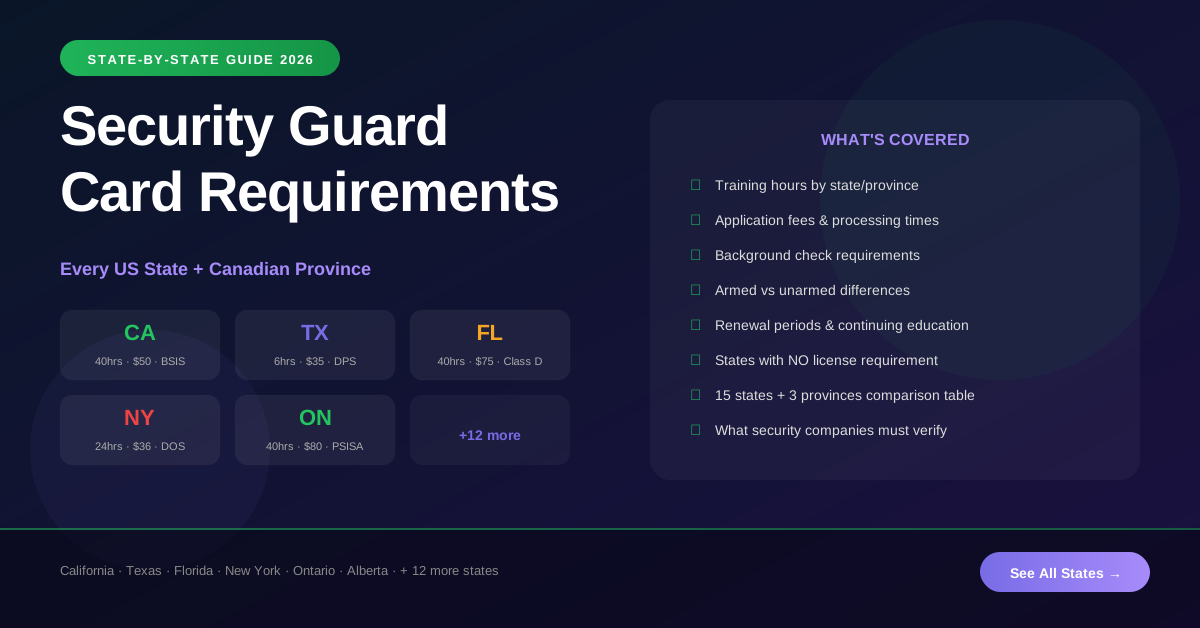
Whether you are an individual looking to start a career in private security or a company owner hiring guards across multiple states, understanding security guard card requirements is essential. Every state and province has its own rules for licensing, training hours, fees, and renewal periods — and getting it wrong can mean fines, contract losses, or guards being pulled off-site.
This guide covers the security guard license and guard card requirements for every major US state and Canadian province in 2026. We include specific fees, training hours, and armed versus unarmed distinctions so you can use this as a working reference.
What Is a Security Guard Card?
A security guard card (also called a guard card, guard license, or security registration) is a government-issued credential that authorizes an individual to work as a private security guard. The card proves that the holder has:
- Passed a criminal background check
- Completed state-mandated training
- Met minimum age requirements (usually 18 for unarmed, 21 for armed)
- Been registered with the state’s licensing authority
The specific name and issuing agency varies by jurisdiction. In California, it is the BSIS Guard Card issued by the Bureau of Security and Investigative Services. In Texas, it is a Level II, III, or IV license from the Department of Public Safety. In Ontario, Canada, it is a security guard license from the Ministry of the Solicitor General.
Why it matters for security companies: If your guards are working without valid credentials, your company is liable. Many commercial clients and government contracts require proof of current guard cards before a single shift is worked. Keeping track of license status, expiration dates, and renewal deadlines across a team of guards is a significant operational responsibility — and one of the reasons security companies use workforce management platforms to track compliance.
California BSIS Guard Card Requirements
California has one of the most well-known guard card programs in the country, administered by the Bureau of Security and Investigative Services (BSIS) under the Department of Consumer Affairs.
Unarmed Guard Card
- Training: 40 hours total — 8 hours of Powers to Arrest training before starting work, plus 32 hours of additional courses within 6 months of employment
- Background check: LiveScan fingerprinting submitted to the DOJ and FBI
- Fee: $50 for the guard card application + approximately $30 for LiveScan processing
- Age: Minimum 18 years old
- Renewal: Every 2 years; 32 hours of continuing education required
- Processing time: 3–6 weeks after fingerprints are submitted
Armed Guard Card (Firearms Permit)
- Additional training: 16 hours of firearms training, including classroom instruction and range qualification
- Firearms qualification: Must pass a shooting test with the specific weapon to be carried
- Additional fee: $80 for the firearms permit application
- Re-qualification: Annual range qualification required
- Age: Minimum 21 years old
Key Details
The 8-hour Powers to Arrest course must be completed through a BSIS-certified training facility before the guard begins working. The remaining 32 hours cover topics like public relations, observation and documentation, communication, and liability. California also requires a separate Exposed Firearms Permit for armed work — the standard guard card alone does not authorize carrying a weapon.
Texas Security Guard License (Level II, III, IV)
Texas uses a tiered licensing system managed by the Texas Department of Public Safety (DPS), Private Security Bureau.
Level II — Unarmed Security Officer (Non-Commissioned)
- Training: 6 hours of pre-assignment training
- Background check: FBI fingerprint check
- Fee: $35 application fee
- Age: 18 years old
- Renewal: Every 2 years; 6 hours of continuing education
Level III — Armed Security Officer (Commissioned)
- Training: Level II training plus 40 hours of firearms and security officer instruction
- Background check: FBI fingerprint check + psychological evaluation
- Fee: $35 application fee + training costs
- Age: 21 years old
- Renewal: Every 2 years; annual firearms requalification
Level IV — Personal Protection Officer
- Training: Level III requirements plus 15 additional hours of personal protection training
- Fee: $35 application fee + training costs
- Age: 21 years old
Key Details
Texas requires all security companies to hold a company license (Class A for guard companies, Class B for investigations). Individual guards must be sponsored by a licensed company. The Level II card allows guards to start working relatively quickly due to the low training hour requirement, but armed work demands a significant investment in both time and cost.
Florida Class D and Class G Licenses
Florida licenses are issued by the Florida Department of Agriculture and Consumer Services (FDACS), Division of Licensing.
Class D License — Unarmed Security Guard
- Training: 40 hours of professional training from a licensed school
- Background check: Fingerprint-based state and FBI check
- Fee: $45 license fee + fingerprint processing fee
- Age: 18 years old
- Renewal: Every 2 years; 4 hours of continuing education (must include legal updates)
Class G License — Armed Security Guard (Statewide Firearms License)
- Training: 28 hours of firearms training, including range qualification
- Background check: Same fingerprint-based check as Class D
- Fee: $45 license fee
- Age: 21 years old
- Prerequisite: Must hold a valid Class D license first
- Renewal: Every 2 years; 4 hours of firearms requalification
Key Details
Florida requires the Class D license before a guard can apply for the Class G armed endorsement. This means armed guards in Florida have a minimum of 68 hours of training (40 + 28). Florida also offers a Class K license for armed private investigators, which is separate from the Class G.
New York Security Guard Registration
New York State licenses are issued by the Division of Licensing Services under the New York Department of State (DOS).
Registration Requirements
- Training: 8 hours of pre-assignment training (within 90 days of hire) + 16 hours of on-the-job training (within 90 days) + 8 hours of annual in-service training
- Background check: Fingerprint-based criminal history check
- Fee: $36 registration fee
- Age: 18 years old
- Renewal: Every 2 years
Armed Guard — Special Armed Guard Registration
- Additional training: 47 hours of firearms training from an approved program
- Fee: $36 registration fee
- Age: 21 years old
- Requirement: Must hold valid unarmed registration first
Key Details
New York uses a “registration” system rather than a “license,” but the practical effect is the same — guards cannot work without it. The employer is responsible for providing and documenting the 16-hour on-the-job training. New York also imposes strict rules on the type and caliber of firearms armed guards may carry, and every firearm must be individually listed on the armed guard’s registration.
Other Major States
Illinois — PERC Card (Permanent Employee Registration Card)
- Issuing authority: Illinois Department of Financial and Professional Regulation (IDFPR)
- Training: 20 hours of basic training within 30 days of employment + 20 hours of on-the-job training within first 6 months
- Background check: Fingerprint-based
- Fee: $55 for 3-year registration
- Renewal: Every 3 years
- Armed: Requires Firearm Control Card (additional 20 hours of firearms training + range qualification)
Georgia
- Issuing authority: Georgia Board of Private Detective and Security Agencies
- Training: No state-mandated minimum training hours for unarmed guards; employer-provided training
- Background check: Required
- Fee: $30 registration fee
- Renewal: Every 2 years
- Armed: Requires additional firearms training and separate armed guard license
Pennsylvania
- Issuing authority: Pennsylvania State Police, Lethal Weapons Training Act
- Training: No state-mandated training for unarmed guards (employers set their own)
- Background check: Required for all guards
- Fee: Varies by employer registration
- Armed: Requires Act 235 certification — 40 hours of classroom instruction, weapons qualification, and annual requalification
Ohio
- Issuing authority: Ohio Department of Public Safety, Private Investigator Security Guard Services
- Training: No pre-assignment training required for unarmed; employer training only
- Background check: Fingerprint-based FBI and state check
- Fee: $50 for registration
- Renewal: Every 3 years
- Armed: Requires 20 hours of firearms-specific training + Ohio Peace Officer Training Academy (OPOTA) approved course + annual requalification
Michigan
- Issuing authority: Michigan Department of Licensing and Regulatory Affairs (LARA)
- Training: No state-mandated minimum for unarmed guards
- Background check: Required
- Fee: Employer-based licensing; no individual guard fee
- Armed: Requires 8 hours of firearms training + qualification
- Renewal: Every 3 years
Arizona
- Issuing authority: Arizona Department of Public Safety
- Training: 8 hours of pre-assignment training for unarmed guards
- Background check: Fingerprint-based
- Fee: $54 registration fee
- Renewal: Every 2 years
- Armed: Additional firearms training and registration required
States With No License Requirement
Not every state requires individual security guards to hold a state-issued license or guard card. In these states, the regulatory framework is lighter or nonexistent at the state level:
- Mississippi — No state-level license for unarmed guards
- Missouri — No state guard card requirement; some municipalities have local rules
- Kentucky — No individual guard license; companies must be registered
- Idaho — No state licensing requirement for security guards
- Wyoming — No state-level guard license
- South Dakota — No state guard licensing program
What This Means in Practice
The absence of a state license requirement does not mean guards can operate without any oversight. In many of these states:
- Security companies still need a business license or private security agency registration
- Municipal or county-level permits may be required
- Armed guards are almost always subject to firearms regulations regardless of whether a guard card exists
- Employers are still liable for properly training their staff, and clients will often require proof of training in contracts
If you operate in a state without a guard card requirement, document your internal training program thoroughly. It protects you in liability situations and demonstrates professionalism to clients.
Ontario Security Guard License
Ontario has one of the most structured security guard licensing systems in Canada, administered by the Ministry of the Solicitor General under the Private Security and Investigative Services Act (PSISA).
Requirements
- Training: 40 hours of Ministry-approved basic training curriculum
- Exam: Written test administered by the Ministry (must score 70% or higher)
- Background check: Criminal record check (CPIC) through local police
- Fee: Approximately $80 for the license
- Age: 18 years old
- Renewal: Every 2 years
- Processing time: 4–8 weeks
Key Details
Ontario’s 40-hour curriculum covers the legal authority of security guards, emergency procedures, use of force theory, health and safety, and report writing. Guards must carry their license at all times while on duty and present it upon request. Ontario does not permit security guards to carry firearms — armed security is handled by police or specially authorized units. Ontario also requires that security guard training providers be licensed by the Ministry.
Alberta and British Columbia Requirements
Alberta
- Issuing authority: Alberta Solicitor General and Public Security, Security Services and Investigators Act (SSIA)
- Training: No provincially mandated minimum training hours, but employers must provide “adequate training” — most employers require 40+ hours
- Background check: Criminal record check required
- Fee: Approximately $60 for the individual security guard license
- Age: 18 years old
- Renewal: Every 2 years
- Key detail: Alberta requires both the security company and each individual guard to be licensed. Guards must carry their license while on duty.
British Columbia
- Issuing authority: BC Ministry of Public Safety and Solicitor General, Security Programs & Police Technology Division
- Training: Basic Security Training (BST) course — approximately 40 hours, covering legal authorities, conflict resolution, emergency procedures, and report writing
- Exam: Provincial written exam (must pass)
- Background check: Criminal record check
- Fee: Approximately $100 for the license + training costs
- Age: 19 years old (BC’s age of majority)
- Renewal: Every 2 years
- Key detail: BC’s BST is a standardized curriculum developed by the Justice Institute of British Columbia. All training providers must use this curriculum.
Armed vs Unarmed Guard Requirements
The distinction between armed and unarmed security guard requirements is significant across every jurisdiction. Here is what to expect:
Unarmed Guard Typical Requirements
- Background check (fingerprint-based in most states)
- 8–40 hours of initial training depending on the state
- Minimum age of 18
- Renewal every 2–3 years
Armed Guard Additional Requirements
- Minimum age of 21 in virtually every jurisdiction
- Firearms-specific training: Typically 16–47 additional hours beyond unarmed training, covering firearm safety, legal use of force, marksmanship, and situational judgment
- Range qualification: Passing a live-fire shooting test with the specific weapon type to be carried on duty
- Annual or bi-annual requalification: Most states require armed guards to re-qualify on the range every 1–2 years, even if the license itself is valid longer
- Psychological evaluation: Required in some states (Texas Level III requires one)
- Additional insurance: Many employers require armed guards to carry additional liability coverage
- Weapon registration: Some states (like New York) require each specific firearm to be registered on the guard’s license
Cost Comparison
Armed guard licensing typically costs $200–$800 more than unarmed licensing when you factor in the additional training hours, range fees, and application fees. However, armed guards command significantly higher hourly billing rates, making the investment worthwhile for guards and companies that serve high-security contracts.
How to Renew Your Guard Card
Guard card renewal is an ongoing compliance obligation. Missing a renewal deadline means a guard cannot legally work until the license is reinstated — which can mean lost shifts and revenue.
General Renewal Process
- Check your expiration date — most guard cards expire every 2 years (California, Texas, Florida, New York, Ontario) or every 3 years (Illinois, Ohio, Michigan)
- Complete continuing education — required hours vary:
- California: 32 hours every 2 years
- Florida: 4 hours every 2 years
- New York: 8 hours annually
- Illinois: 20 hours every 3 years
- Ontario: No continuing education required, but must pass exam again
- Submit your renewal application — usually through the same online portal used for initial registration
- Pay renewal fees — generally the same as or lower than initial application fees
- Complete any updated background checks — some states require a new fingerprint submission at renewal
Tips for Security Companies
- Start the renewal process 60–90 days before expiration
- Maintain a spreadsheet or compliance dashboard tracking every guard’s license number, issue date, and expiration date
- Set automated reminders at 90 days, 60 days, and 30 days before each expiration
- Budget for continuing education costs as part of your operating expenses
- Keep copies of all guard cards and training certificates on file
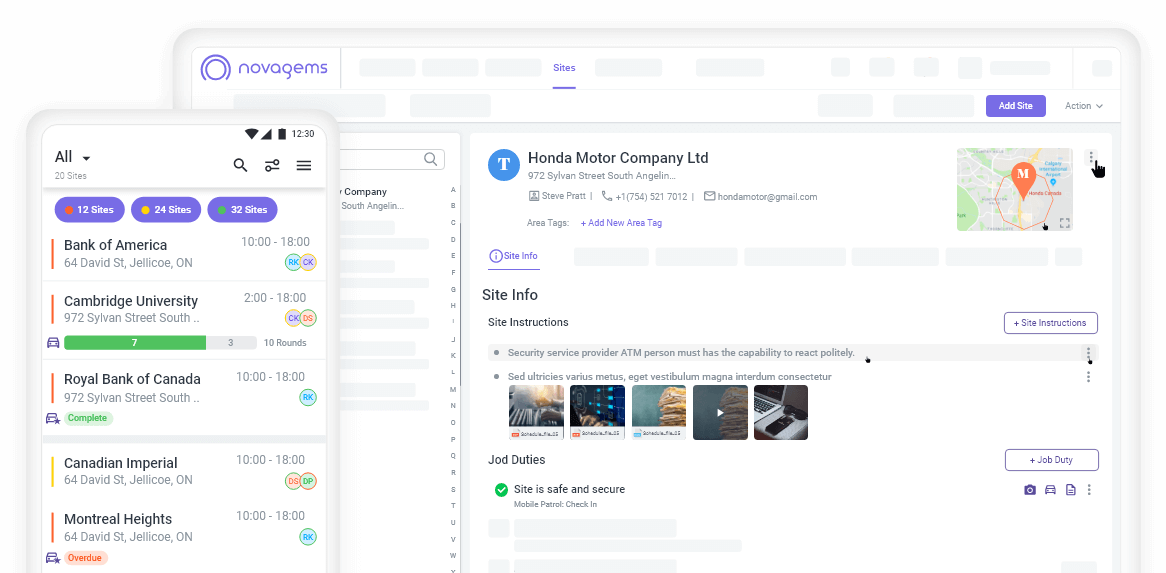
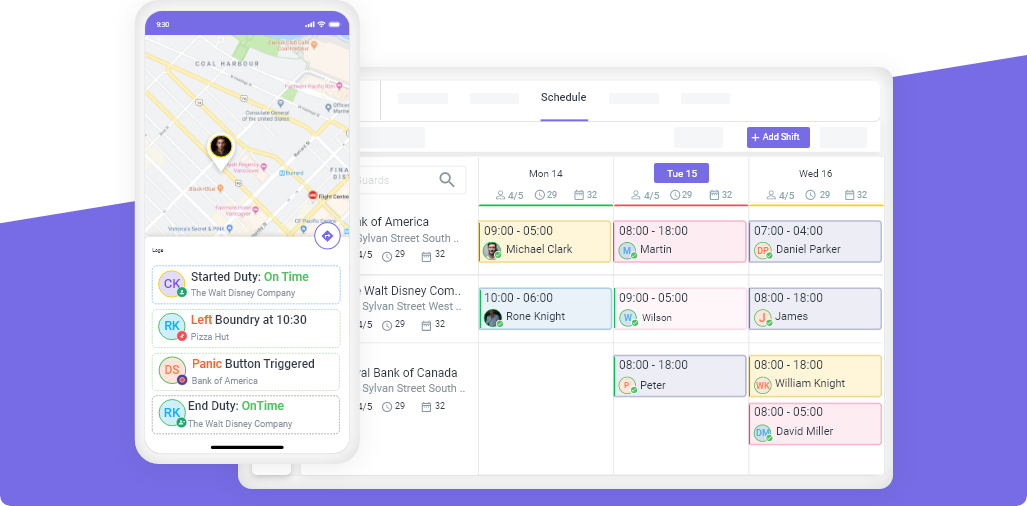
Tools like Novagems help security companies track guard credentials and get alerts before licenses expire, reducing the risk of compliance gaps.
Guard Card Requirements Comparison Table
This table covers the major states and Canadian provinces. Use it as a quick reference when hiring guards in new jurisdictions or expanding your security business.
| State / Province | Training Hours (Unarmed) | License Fee | Background Check | Renewal Period | Armed Extra Requirements |
|---|---|---|---|---|---|
| California | 40 hours (8 pre-assignment + 32 within 6 months) | $50 + ~$30 LiveScan | ✓ Fingerprint (DOJ + FBI) | 2 years | 16 hrs firearms training + range qual; $80 fee |
| Texas | 6 hours (Level II) | $35 | ✓ Fingerprint (FBI) | 2 years | 40 hrs (Level III) + psych eval; annual range requalification |
| Florida | 40 hours (Class D) | $45 | ✓ Fingerprint (state + FBI) | 2 years | 28 hrs firearms (Class G); must hold Class D first |
| New York | 24 hours (8 pre + 16 OJT) + 8 hrs annual | $36 | ✓ Fingerprint | 2 years | 47 hrs firearms training; each weapon registered |
| Illinois | 20 hours + 20 hrs OJT | $55 | ✓ Fingerprint | 3 years | 20 hrs firearms + range qual (Firearm Control Card) |
| Georgia | No state minimum | $30 | ✓ Required | 2 years | Separate armed license + firearms training |
| Pennsylvania | No state minimum (unarmed) | Varies | ✓ Required | Varies | Act 235: 40 hrs + annual requalification |
| Ohio | No state minimum | $50 | ✓ Fingerprint (FBI + state) | 3 years | 20 hrs OPOTA-approved + annual range requalification |
| Michigan | No state minimum | Employer-based | ✓ Required | 3 years | 8 hrs firearms + qualification |
| Arizona | 8 hours | $54 | ✓ Fingerprint | 2 years | Additional firearms training + registration |
| North Carolina | 16 hours | $50 | ✓ Fingerprint | 2 years | Additional armed training + separate registration |
| Washington | None (employer training) | $100 | ✓ Fingerprint | 2 years | Must hold CPL or additional armed guard endorsement |
| Virginia | 18 hours (within 90 days) | $50 | ✓ Fingerprint | 2 years | Additional firearms endorsement + range qual |
| Colorado | No state minimum | No individual fee | ✓ Required | N/A (employer-based) | Employer-specific armed requirements |
| Nevada | 8 hours | $100 | ✓ Fingerprint | 5 years | 16 hrs firearms + qualification; separate work card |
| Ontario | 40 hours + written exam | ~$80 | ✓ CPIC check | 2 years | ✗ Armed security not permitted for private guards |
| Alberta | No provincial minimum (employer training) | ~$60 | ✓ Criminal record check | 2 years | ✗ Armed security very restricted |
| British Columbia | ~40 hours (BST) + exam | ~$100 | ✓ Criminal record check | 2 years | ✗ Armed security very restricted |
Notes:
- Fees listed are state/provincial government fees only and do not include training course costs, which can add $100–$500.
- “No state minimum” means the state does not mandate a specific number of training hours; employers are still expected to provide adequate training.
- Canadian provinces generally do not permit private security guards to carry firearms.
What Security Companies Should Know
If you own or manage a security guard company, guard card compliance is not just your guards’ responsibility — it is yours. Here is what matters most from an operational perspective.
Hiring Across States
When your company operates in multiple states, you need to track different licensing requirements for each jurisdiction. A guard licensed in Florida cannot work a shift in Georgia without obtaining Georgia credentials. Build a compliance matrix for every state where you operate and review it quarterly.
Onboarding Timeline
Guard card processing times directly affect how quickly you can deploy new hires. States like Texas (6 hours of training, 2–3 week processing) allow faster deployment than states like California (40 hours of training, 3–6 week processing). Factor this into your recruitment pipeline.
Compliance Liability
If an unlicensed guard is found on a client site, the consequences can include:
- Fines — state regulatory agencies impose penalties ranging from $500 to $10,000+ per violation
- Contract termination — many client contracts include compliance clauses that allow immediate termination
- License revocation — repeated violations can result in the company’s own operating license being suspended or revoked
- Legal liability — in the event of an incident, an unlicensed guard creates significant legal exposure for the company
Record Keeping
Maintain complete records for every guard, including:
- Copy of current guard card / license
- Training certificates (initial and continuing education)
- Firearms qualification records (for armed guards)
- Background check confirmation
- License expiration date and renewal status
Scaling Compliance
As your company grows beyond 20–30 guards, tracking credentials manually in spreadsheets becomes unreliable. One missed renewal can result in a compliance violation. Digital workforce management systems automate credential tracking, send renewal alerts, and create an audit trail for every guard — which is especially valuable when responding to client compliance audits or regulatory inspections.
Final Thoughts
Security guard card requirements vary significantly across North America. Some states require 40+ hours of training and extensive background checks, while others have no individual licensing at all. Armed guard requirements are universally more demanding than unarmed, with additional training, fees, and ongoing requalification.
Whether you are getting your first guard card or managing license compliance for a team of 200 guards, the key is to know the specific requirements for every jurisdiction where you operate, build compliance timelines into your hiring and renewal processes, and maintain organized records.
This guide is current as of early 2026, but licensing requirements do change. Always verify current fees and training hour requirements directly with your state or provincial licensing authority before beginning the application process.
See Novagems in action
Join 500+ security & cleaning companies that replaced spreadsheets with Novagems.
✓ 14-day free trial · ✓ Free onboarding · ✓ Cancel anytime